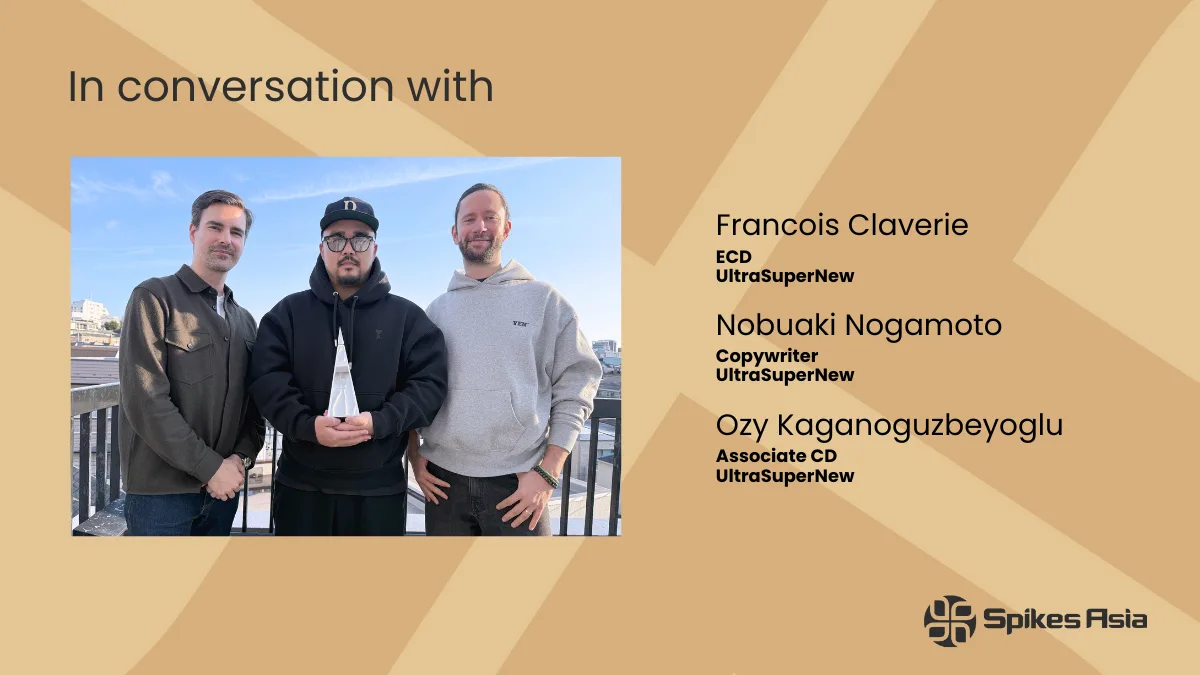
Independent agency and first-time winner UltraSuperNew earned a Silver Spike in Film for ‘Make it Unbelievable’ – a collaboration between two of Japan’s biggest stars, Takeshi Kitano and Gekidan Hitori.
The work consisted of films that cleverly used humour and cultural relevance to show Japanese audiences how ‘unbelievably’ easy it is to use Canva.
We spoke with Francois Claverie, ECD, Nobuaki Nogamoto, Copywriter, and Ozy Kaganoguzbeyoglu, Associate CD at UltraSuperNew to find out how Canva made its mark in Japan.
1. Talk us through the casting process. How did you decide who would work best for your 'high-context' approach'?
今回のキャスティングについて教えてください。この作品ならではの「ハイコンテクスト」な表現を成立させるために、どのような考え方でキャストを選ばれたのでしょうか?
Francois Claverie: The “Make it Unbelievable” idea led us to ask ourselves: which A-lister would the public love to see getting annoyed at a friend or colleague for not believing they designed something unbelievably good on their own, using Canva. Kitano came to mind immediately. His frustration could naturally see him slip into one of his on-screen personas: a short-fused mobster or a period-piece warlord, all with sinister consequences. To face his wrath, we turned to Gekidan Hitori, a comedian and director (he directed Kitano’s biopic), and self-proclaimed Kitano admirer. The existing senpai-kōhai (mentor-junior) relationship between the two celebrities made for the perfect dramatic setup.
[クラヴェリ フランソワ] 「信じられないほど、素晴らしく(Make it Unbelievable)」というアイデアの軸にあるのは「Canvaで自分が作ったデザインなのに、完成度が高すぎて周囲にまったく信じてもらえない」という状況です。その前提のもとで、「そんな理不尽な場面に置かれたとき、誰が一番本気で怒りそうか」「その怒りが、最も印象的で、なおかつユーモアとして成立するのは誰か」という視点からキャスティングを考えました。 そこで真っ先に思い浮かんだのが、北野武さんです。北野さんであれば、怒りが高まるにつれて、これまで映画で演じてこられた短気な人物像や、極道、時代劇の権力者といったキャラクターが自然と重なり、強い緊張感と笑いを同時に生み出せると感じました。 そして、その北野さんの「怒り」を受け止める存在として選んだのが、劇団ひとりさんです。劇団ひとりさんは、北野さんの伝記映画を監督した経験もあり、以前から北野さんを尊敬されていることでも知られています。 実際にお二人の間には「先輩・後輩」というリアルな関係性があり、その関係性そのものがドラマとして機能しました。結果として、このリアルな関係性が作品に自然な説得力を与え、今回の表現にとって非常に相性の良いキャスティングになったと考えています。
Make it Unbelievable ULTRASUPERNEW, TOKYO / CANVA / 2025
2. Properly understanding this campaign requires a certain level of cultural understanding e.g. the inside jokes, the “senpai-kohai” relationship, etc. Were you nervous the diverse Jury wouldn't get it?
このキャンペーンは、内輪のジョークや「先輩・後輩」の関係性など、日本独特の文脈を前提とした表現が多かったと思います。海外を含む多様な審査員の方々に、そのニュアンスが伝わらないのではと不安に感じることはありましたか?
Nobuaki Nogamoto: In developing our idea and concept into a script, we paid close attention to cultural relevance while making a conscious effort to keep the humor light and accessible. The goal was for the jokes to land even without deep cultural knowledge, and to feel even more rewarding for those who had it. So, we were less concerned with strict comprehension and more focused on whether the humor simply worked.
[野ケ本 信明] アイデアを脚本に落とし込む際には、文化的な文脈を大切にしながらも、ユーモアそのものはできるだけ分かりやすく、誰にでも届く表現にすることを意識しました。文化的な背景を詳しく知らなくても「なんとなく面白い」と感じられ、日本の文脈を理解している人には、より深く楽しんでもらえる。そんなバランスを目指していました。そのため、「すべてのジョークを正確に理解してもらえるかどうか」よりも、「ユーモアとしてきちんと伝わるか」「素直に笑ってもらえるか」を重視しました。結果として、審査員の理解についても、大きな不安を感じることはありませんでした。
3. Humour and cultural relevance are central to 'Make it Unbelievable'. How do you think these elements contributed to the campaign’s success in showcasing Canva’s accessibility and empowering users to create beautiful designs effortlessly?
「信じられないほど、素晴らしく(Make it Unbelievable)」では、ユーモアや文化的な文脈が軸になっていたと思います。それらは、Canvaの「使いやすさ」や、「誰でも簡単に美しいデザインが作れる」と感じてもらう点で、キャンペーン全体にどんな影響を与えたと思いますか?
Nobuaki Nogamoto: We believe humor lowered the barrier to entry, making Canva feel more approachable rather than intimidating. This was especially important as it was Canva’s first large-scale campaign and the brand was still new to the Japanese market. By embedding this humor in culturally familiar situations, we helped audiences quickly grasp Canva’s accessibility and its core value proposition: That anyone can create high-quality designs without prior design experience. Together, these elements were key to how we effectively delivered our message to the audience.
[野ケ本 信明] 私たちは、ユーモアがCanvaを身近に感じてもらうための大きな役割を果たしたと考えています。それによって、「難しそう」「プロ向け」といった先入観を和らげることができたと思います。 特に今回は、日本市場におけるCanva初の大規模キャンペーンで、ブランド自体が日本ではまだ新しい段階でした。そのため、日本の人々にとって馴染みのあるシチュエーションや関係性の中にユーモアを組み込むことが重要でした。 そうすることで、「これなら自分にもできそう」「気軽に試してみたい」と感じてもらいやすくなったと思います。結果として、Canvaの使いやすさや、デザイン経験がなくても高品質なものが作れるという価値を、自然な形で伝えることができました。
4. Why did you prioritise entering 'Make It Unbelievable' into Spikes Asia?
数あるアワードの中で、なぜ「信じられないほど、素晴らしく(Make It Unbelievable)」をSpikes Asiaに応募することを優先されたのでしょうか?
Francois Claverie: We are very selective when it comes to award shows. As an independent agency, we don’t have a large budget earmarked for entries. In APAC, Spikes are some of the highest creative recognitions one can clinch.
[クラヴェリ フランソワ] 私たちは、アワードに関してはかなり慎重に選ぶようにしています。独立系エージェンシーという立場上、エントリーに使える予算も限られています。その中でSpikes Asiaは、APAC地域において最も権威あるクリエイティブアワードの一つであり、挑戦する価値があると考えました。
5. What does winning a Spike for the first time mean to you, especially as an independent agency?
今回が初めてのSpikes Asia受賞となりましたが、特に独立系エージェンシーとして、この受賞をどのように受け止めていますか?
Ozy Kaganoguzbeyoglu: Collectively speaking, it reaffirms our agency’s ability to create work that stands out and gets talked about. Categorically speaking, it’s deeply satisfying to know that we entertained those who watched these Canva films all the way to the end.
[コージー オジー] チーム全体としては、「人の記憶に残り、きちんと話題になる仕事ができている」ということを、あらためて確認できた出来事でした。個人的には、Canvaの広告を最後まで見てくれた人たちを、しっかり楽しませることができたという実感があり、とても嬉しかったです。
6. Having entered the Awards over the last few years, what have you learnt through the entry process? Is there anything you did differently this time?
ここ数年、継続してアワードに挑戦されてきた中で、エントリーのプロセスを通じて得た学びはありますか?また、今回はこれまでと比べて意識的に変えた点などはありましたか?
Francois Claverie: Looks like we showed up with a stronger piece of work this time!
[クラヴェリ フランソワ] 今回は、シンプルに言うと、これまで以上に手応えのある作品で挑めたと思います!
7. Drawing from your experience, do you have any advice for other Japanese agencies considering entering Spikes Asia, especially independent ones?
ご自身の経験を踏まえて、これからSpikes Asiaへの応募を検討している日本の代理店、特に独立系エージェンシーに向けて、何かアドバイスがあれば教えてください。
Ozy Kaganoguzbeyoglu: Our past experience of submitting various types of work taught us to keep two important things in mind. Firstly, the work doesn’t speak for itself — people interpret it. Therefore, the core message and the insight should ring a bell, if not globally, then at least across the region, so the work has a better chance of grabbing the judges’ attention. Secondly, there’s the necessity of being smart when it comes to using the allocated budget versus the number of award categories you submit the work to. As an independent agency, you only have a few shots to make noise in a landscape where giants scream loudly and pour out award budgets by default.
[コージー オジー] これまでさまざまな作品でアワードに応募してきた経験から、特に大切だと感じていることが二つあります。 一つ目は、「作品だけで、意図や背景のすべてが伝わるとは限らない」ということです。作品は見る人の解釈があって初めて成立するため、コアとなるメッセージやインサイトは、世界共通である必要はなくとも、少なくとも地域レベルでは共感されるものであることが重要だと考えています。そうすることで、審査員の印象にも残りやすくなり、作品の強さもより伝わりやすくなります。 二つ目は、限られた予算をどう使うかを戦略的に考えることです。 独立系エージェンシーの場合、無制限にエントリーできるわけではありません。 多くのカテゴリーに予算を投じる大手エージェンシーがいる中で、どこに絞って勝負するのかを見極めることが、とても重要だと感じています。
Don’t miss your chance to benchmark your work against the best of APAC creativity.
Enter by 29 January 2026.